
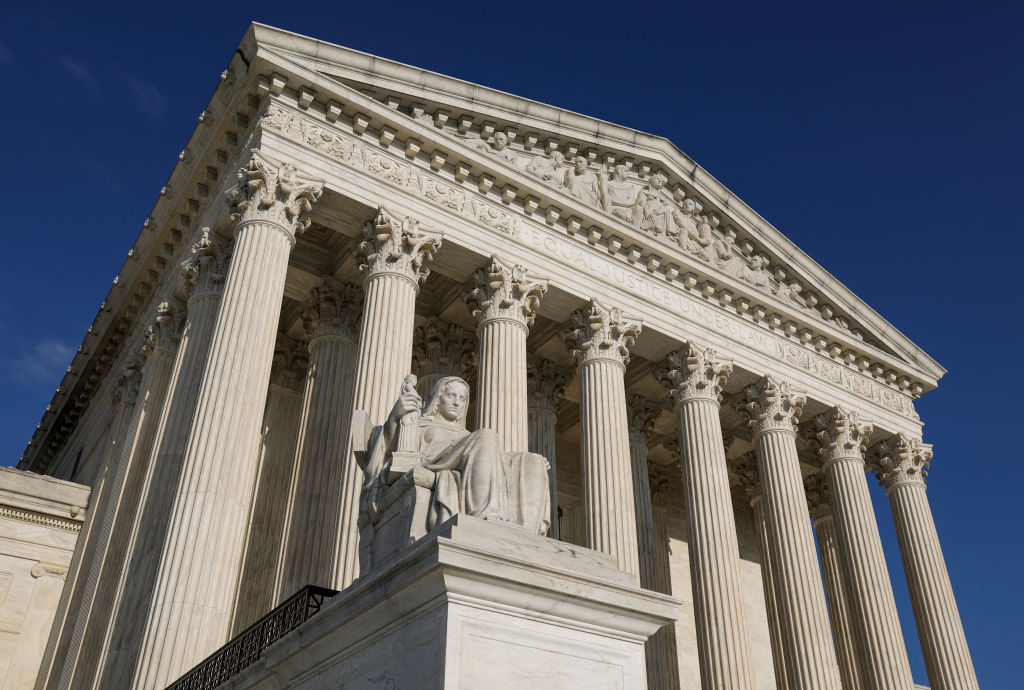
On Friday, the Supreme Court agreed to hear President Trump’s order to reconsider birthright citizenship. Trump has planned to redefine the implementation of birthright citizenship as a part of his crackdown on immigration in America.
What is birthright citizenship?
Birthright citizenship is the principle under the 14th Amendment that anyone born on U.S. soil is a U.S. citizen. The 14th Amendment states clearly that “all persons born or naturalized in the United States, and subject to the jurisdiction thereof, are citizens of the United States and of the state wherein they reside.” The Fourteenth Amendment was enacted following the end of the Civil War to clarify citizenship status for the millions of newly freed slaves. Among other things, the Fourteenth Amendment sought to ensure birthright citizenship for everyone born on U.S. territory, regardless of race.
The landmark United States v. Wong Kim Ark (1898) case set the precedent for the current consideration of birthright citizenship. In this Supreme Court case, Wong Kim Ark, who was born in the United States to two Chinese citizen parents, was denied re-entry into the country as he was not a citizen. The court justices ruled in favor of Wong Kim Ark, stating that the Citizenship Clause applied to him as he was born in the country regardless of his parents’ citizenship status.
The Trump Administration’s Executive Order
On his first day in office, Trump signed an order to end birthright citizenship for anyone born to immigrants who had entered the country legally or had temporary residency. The administration argues that allowing birthright citizenship to apply to children of illegal immigrants is currently an incentive for illegal immigration.
White House spokesperson Abigail Jackson said, “This case will have enormous consequences for the security of all Americans, and the sanctity of American citizenship. The Trump administration looks forward to making its case on the issue of birthright citizenship on behalf of the American people.”
Federal judges in various states initially blocked the order. In Barbara v. Trump, plaintiffs led by the American Civil Liberties Union (ACLU) have filed this class action suit against President Trump, the Department of Homeland Security, the Department of State, the Department of Agriculture, and the Centers for Medicare and Medicaid Services. The court barred the enforcement of the executive order, therefore preventing it from applying to babies born on or after Feb. 20, 2025. The court’s decision was then appealed in Trump v. Washington, and the judge similarly found the executive order to be invalid due to its contradiction of the 14th Amendment.
However, the Supreme Court’s decision to review the rulings of the lower courts has major consequences and could reshape over a hundred years of immigration precedent. Somewhere around 250,000 babies are born in the United States to unauthorized immigrant parents, according to data from the Pew Research Center.
Looking Forwards
The court will be hearing oral arguments regarding the case early next year, and a ruling will likely be made in the summer. The court will be analyzing the citizenship clause, the first sentence, of the 14th Amendment: “All persons born or naturalized in the United States, and subject to the jurisdiction thereof, are citizens of the United States and of the State wherein they reside.” As many of the court’s justices are originalists, they favor a strict and original interpretation of the Constitution. In this context, they could therefore rule against the application of the 14th Amendment to birthright citizenship for children born to non-permanent residents and citizens.